
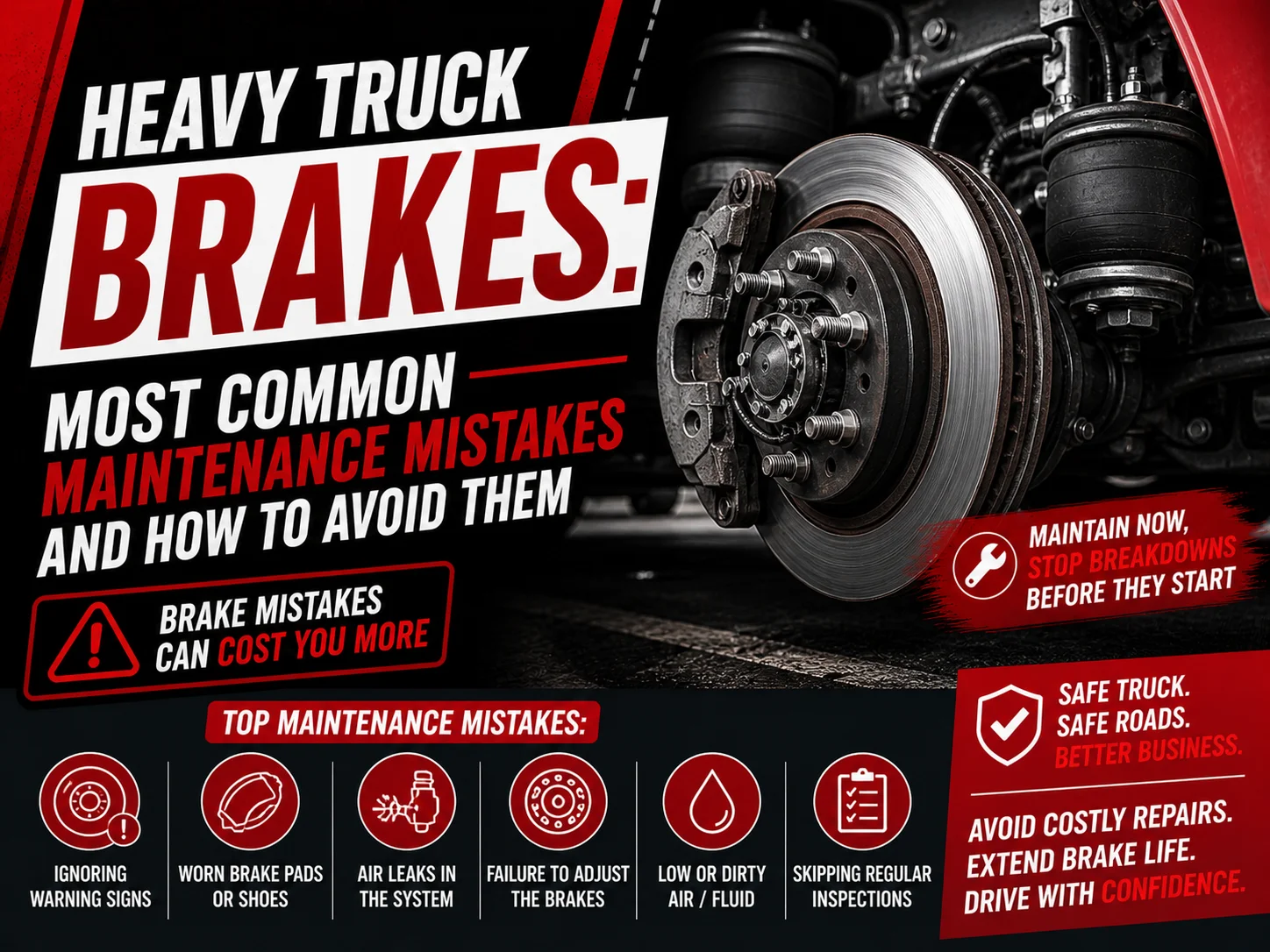
Heavy Truck Brakes: Most Common Maintenance Mistakes and How to Avoid Them
Brakes are the most important safety system on a heavy truck.
Every stop, every slowdown, and every emergency maneuver depends entirely on the braking system working properly.
Yet despite their importance, truck brake systems are often misunderstood or improperly maintained.
Many brake problems do not appear suddenly. They develop gradually over time until braking performance becomes unsafe. :contentReference[oaicite:0]{index=0}
The most common truck brake maintenance mistakes
1. Waiting for visible symptoms before taking action
One of the biggest mistakes is waiting until the truck starts making noise or pulling during braking before inspecting the system.
On heavy trucks, symptoms often appear late, once wear is already advanced.
This can lead to:
- Increased brake wear
- Reduced braking efficiency
- Higher repair costs
Best practice:
- Inspect brake linings regularly
- Follow preventive maintenance schedules
- Detect wear before symptoms appear
💡 Preventive brake inspections are always safer and less expensive than waiting for failure symptoms.
2. Not checking brake adjustment
Even trucks equipped with automatic slack adjusters can develop adjustment issues over time.
Harsh road conditions, corrosion, and winter weather can affect component movement.
This may cause:
- Reduced braking force on one side
- Uneven braking performance
- Continuous friction and overheating
3. Ignoring air system leaks
Air leaks are extremely common on heavy truck brake systems.
The compressor may temporarily compensate, but even small leaks eventually become dangerous.
Common signs include:
- Hissing sounds underneath the truck
- Rapid pressure loss
- Frequent compressor cycling
Possible consequences:
- Reduced braking efficiency
- Automatic brake engagement
- Unsafe braking conditions
⚠️ Warning
Air pressure problems can seriously affect braking performance and vehicle safety.
Brake system issues should never be ignored on a heavy truck.
4. Neglecting air dryer maintenance
The air dryer removes moisture from the brake system.
Without proper maintenance, moisture can accumulate and freeze inside the system, especially during winter.
This can cause:
- Frozen valves
- Brake response issues
- Air system malfunctions
To prevent this:
- Inspect the air dryer regularly
- Drain moisture during maintenance
- Replace worn components when necessary
5. Replacing brake components on one side only
Replacing brake linings on only one side creates imbalance in braking force.
This often leads to:
- Uneven braking
- The truck pulling to one side
- Premature wear on new parts
Best practice:
Always replace brake components per axle to maintain balanced braking.
6. Using low-quality brake parts
Cheap or uncertified brake components reduce both durability and braking performance.
This may result in:
- Faster wear
- Reduced braking efficiency
- Lower resistance under heavy load
Brake quality directly affects stopping power and overall safety.
7. Skipping post-winter brake inspection
Winter conditions put heavy stress on truck brake systems.
Salt, moisture, and freezing temperatures accelerate corrosion and wear.
Common post-winter problems include:
- Rust on components
- Stuck adjusters
- Damaged seals
Seasonal brake inspections are essential after winter driving conditions.
How to prevent brake problems on a heavy truck
- Inspect brakes regularly
- Check brake adjustment frequently
- Maintain the air system properly
- Use high-quality replacement parts
A proactive maintenance approach significantly reduces the risk of brake failure.
When you should get your truck brakes inspected
You should schedule an inspection if you notice:
- Noise during braking
- The truck pulling to one side
- Burning smells or excessive heat
- Loss of air pressure
Early diagnosis prevents major brake system failures and expensive repairs.
Normal vs abnormal brake behavior
- Smooth and consistent braking → Normal
- Slight variation depending on load → Sometimes normal
- Noise or vibration → Potential issue
- Uneven braking → Problem requiring immediate attention
A properly functioning brake system should always feel stable and predictable.
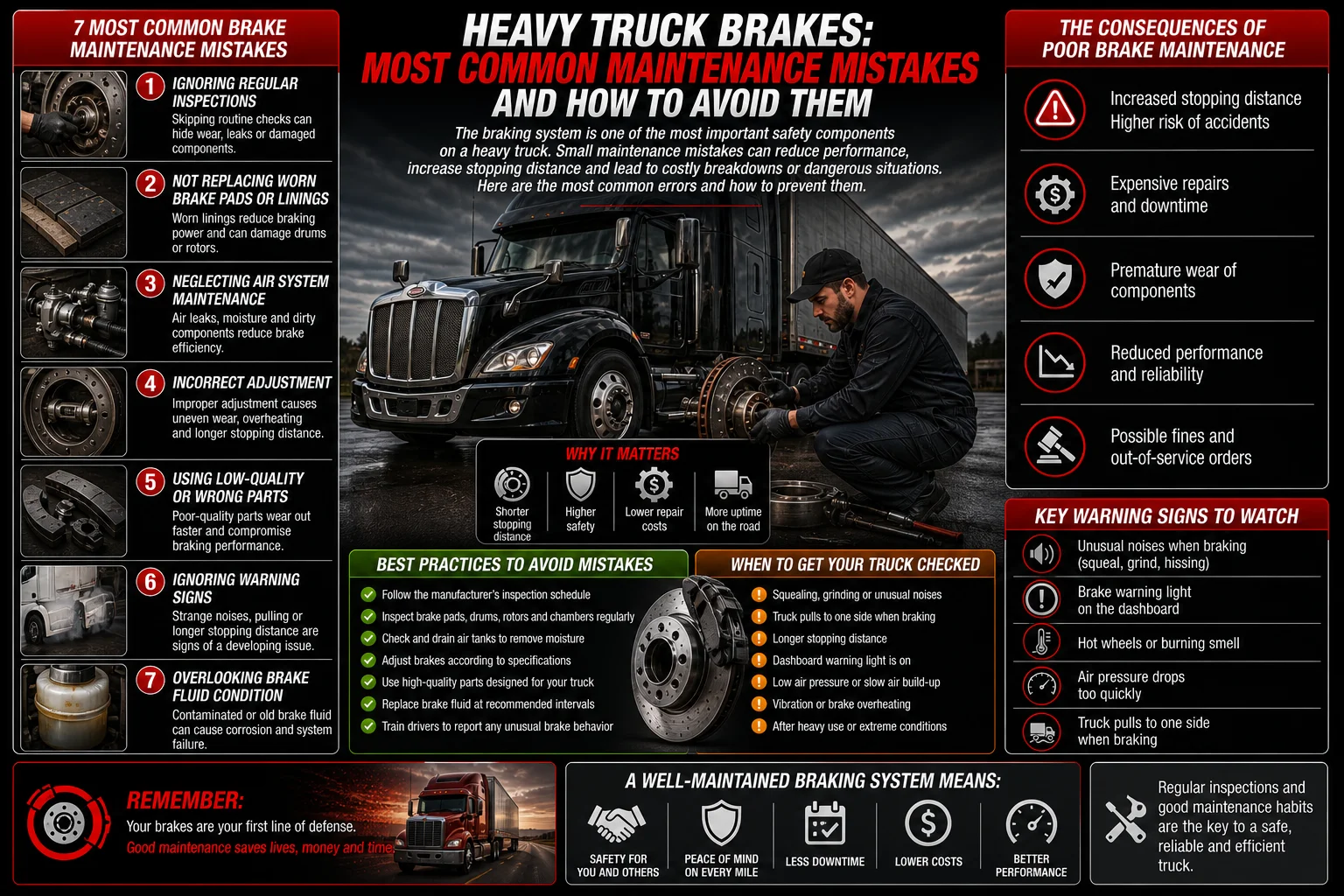
Why choose Ressorts Industriels Laval / Centre du Camion C.T. CAM
Truck brake systems require precision and experience.
At Ressorts Industriels Laval / Centre du Camion C.T. CAM, we perform complete brake inspections to ensure every component works properly.
Our inspection process includes:
- Brake lining measurements
- Air system inspection
- Air dryer verification
- ABS system testing
- Complete brake component analysis
We provide detailed diagnostics and focus only on the repairs your truck truly needs.
Frequently asked questions about truck brake maintenance
Why do my truck brakes wear out quickly?
Rapid brake wear is often caused by poor adjustment, low-quality components, or brakes remaining partially engaged.
How often should truck brakes be inspected?
Truck brakes should be inspected regularly as part of preventive maintenance, even before symptoms appear.
Why do my brakes overheat or smell?
Overheating usually comes from constant friction caused by adjustment or mechanical issues.
Is it dangerous to drive with poorly maintained brakes?
Yes. Poor brake maintenance reduces stopping power and increases the risk of failure.
Why does my truck pull during braking?
This is often caused by uneven brake wear or improper component replacement.
What causes air pressure loss in truck brakes?
Air leaks are the most common cause of pressure loss in heavy truck brake systems.
Why is air dryer maintenance important?
The air dryer removes moisture from the system and helps prevent freezing or internal corrosion.
When should I get my brakes checked?
You should schedule an inspection as soon as you notice unusual brake behavior or reduced performance.
Need a truck brake inspection?
Call 450-661-5157 today.
Complete heavy truck brake inspections and preventive maintenance in Laval.